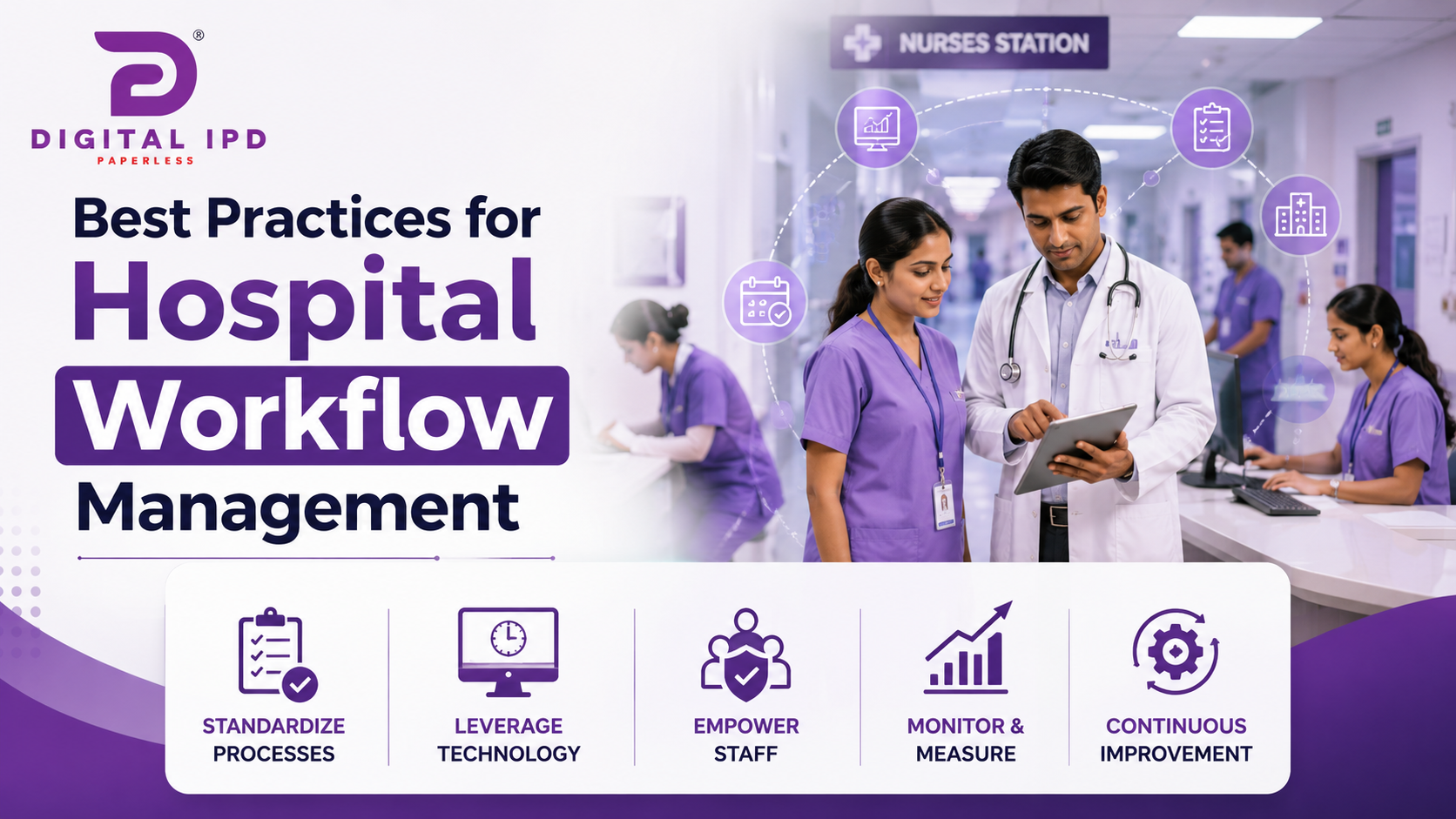
Smart Hospital Workflow Practices
Modern hospitals are no longer judged only by medical expertise. Patients, healthcare professionals, and healthcare entrepreneurs now pay equal attention to how smoothly a hospital functions behind the scenes. Delays in communication, overcrowded departments, and inefficient coordination can affect both patient experience and operational performance. This is where hospital workflow management becomes critical. A well-managed workflow improves patient care, reduces operational pressure, supports staff efficiency, and helps healthcare systems adapt to changing expectations in a fast-evolving digital healthcare environment.
Why Hospital Workflow Management Matters More Than Ever
Healthcare systems today operate under constant pressure. Rising patient expectations, digital transformation, staffing shortages, and increasing administrative complexity have changed how hospitals function. In many healthcare settings, workflow problems are not caused by a lack of expertise but by poor coordination between departments, systems, and people.
This is why hospital workflow management has become one of the most important operational priorities in healthcare. It affects every stage of the patient journey, from appointment scheduling and admission to diagnostics, treatment, discharge, and follow-up communication.
A hospital may have advanced equipment and experienced doctors, but workflow gaps can still create delays, confusion, and patient dissatisfaction. For example, if diagnostic reports are delayed due to disconnected systems, treatment decisions may also slow down. Similarly, poor communication between nursing staff and administrative teams can increase waiting times and create unnecessary stress for both patients and employees.
In modern healthcare environments, workflow management is no longer only about efficiency. It directly affects patient trust, staff morale, resource utilization, and long-term sustainability.
How Real Hospital Workflows Break Down in Everyday Scenarios
Workflow issues often appear gradually rather than through one major failure. In many hospitals, operational inefficiencies become normalized over time. Staff adapt to delays, patients adjust expectations, and departments operate independently without realizing how disconnected systems affect overall performance.
One common issue occurs during patient admission. A patient may complete registration, but delays in transferring records to the next department create bottlenecks. This becomes more visible during high patient volumes or seasonal health surges.
Another challenge appears in communication-heavy environments such as emergency departments. Nurses, physicians, lab technicians, and administrative staff all depend on timely updates. When communication systems are fragmented, even small delays can create operational confusion.
Common Operational Gaps That Affect Hospital Workflows
- Disconnected digital systems slow down coordination between departmentsHospitals often use multiple software systems for appointments, diagnostics, billing, and records. When these systems do not communicate effectively, staff members spend additional time transferring information manually, increasing delays and reducing efficiency.
- Administrative overload affects clinical productivity significantlyMany healthcare professionals spend large portions of their time managing documentation and approvals rather than focusing on patient care. This imbalance affects operational speed and staff satisfaction over time.
- Poor patient flow creates pressure across multiple departmentsDelays in one department often impact several others. For example, delayed discharge processes can affect bed availability, emergency admissions, and scheduling capacity throughout the hospital.
These challenges highlight why workflow management requires system-wide thinking rather than isolated fixes.
The Growing Role of Digital Healthcare Systems in Workflow Optimization
Technology has become central to improving healthcare operations. Modern hospitals increasingly rely on integrated digital systems to improve coordination, reduce delays, and enhance patient experiences.
Digital healthcare infrastructure allows hospitals to centralize communication, automate repetitive processes, and improve real-time visibility across departments. Electronic health records, patient management systems, scheduling platforms, and automated notifications now play an important role in operational efficiency.
However, technology alone does not solve workflow issues automatically. Hospitals often struggle when digital systems are implemented without aligning them with real operational behavior. A system may appear efficient on paper but fail if staff members find it difficult to use during high-pressure situations.
Successful hospital workflow management depends on balancing technology with practical usability. Hospitals that achieve this balance often experience better patient flow, improved communication, and reduced administrative burden.
Cloud-based healthcare platforms have also changed how hospitals operate across multiple locations. Remote coordination, digital reporting, and centralized patient records help improve continuity of care while reducing duplication of work.
Why Patient Flow Is the Core of Efficient Hospital Operations
Patient flow is one of the most important indicators of hospital efficiency. It reflects how smoothly patients move through different stages of care without unnecessary delays or confusion.
Poor patient flow creates operational pressure quickly. Long waiting times in one area affect staff schedules, increase patient frustration, and reduce overall efficiency across departments.
Hospitals with strong workflow systems focus heavily on patient movement patterns. They analyze where delays happen most often and identify operational behaviors that create bottlenecks.
Practical Approaches That Improve Patient Flow
- Clear communication reduces confusion during transitions between departmentsPatients often experience stress when they do not understand the next step in their care process. Structured communication systems help improve movement between registration, diagnostics, consultation, and discharge.
- Real-time scheduling systems improve resource allocationDigital scheduling platforms help hospitals manage patient volume more effectively by balancing appointments, staffing availability, and room utilization dynamically throughout the day.
- Faster discharge coordination improves overall hospital capacityDelayed discharge processes affect incoming admissions and emergency room operations. Hospitals with efficient discharge workflows improve bed management and reduce unnecessary congestion.
Patient flow management also affects healthcare costs indirectly. Operational delays often increase staffing pressure, administrative workload, and resource waste over time.
Why Staff Coordination Shapes Workflow Efficiency More Than Technology Alone
Hospitals depend on coordinated teamwork across multiple professional roles. Even advanced healthcare systems can fail operationally if communication between teams remains inconsistent.
Healthcare professionals work in highly dynamic environments where priorities shift constantly. Emergency cases, staffing changes, patient surges, and treatment updates require fast adaptation. Without clear coordination, workflow disruptions become unavoidable.
One major challenge is that departments often optimize their own tasks without considering system-wide impact. For example, administrative teams may prioritize documentation accuracy while clinical staff focus on treatment speed. Both goals are important, but without alignment, operational friction develops.
Hospitals with strong workflow management cultures usually emphasize collaborative communication rather than isolated department performance. Daily coordination meetings, centralized updates, and standardized reporting systems help reduce misunderstandings significantly.
Workflow improvement also requires listening to frontline staff. Nurses, technicians, and support teams often identify operational gaps before management does because they experience workflow pressure directly during patient interactions.
How Automation Is Reshaping Modern Hospital Workflows
Automation is becoming increasingly important in healthcare operations. Hospitals now automate scheduling, patient reminders, billing processes, inventory management, and record updates to reduce repetitive administrative tasks.
The purpose of automation is not to replace healthcare professionals but to reduce operational friction. When repetitive tasks are automated effectively, staff members can focus more on patient care and decision-making.
Automation also improves consistency. Manual workflows often depend heavily on individual behavior, which creates variability. Automated systems help standardize routine processes and reduce human error.
However, automation must be implemented carefully. Over-automation without human flexibility can create new challenges. Hospitals that rely too heavily on rigid systems may struggle during unexpected operational situations.
The most effective healthcare environments combine automation with adaptive human oversight. This balance improves both operational reliability and practical responsiveness.
Challenges Hospitals Face While Improving Workflow Systems
Improving workflows sounds straightforward in theory, but real healthcare environments are complex. Hospitals often face financial, operational, and cultural barriers while implementing workflow changes.
One major challenge is resistance to change. Staff members who are already under pressure may hesitate to adopt new systems or processes, especially if previous implementations created frustration.
Budget limitations also affect workflow modernization. Smaller healthcare facilities may struggle to invest in advanced digital systems or training programs.
Another challenge involves balancing efficiency with patient-centered care. Hospitals must improve speed and coordination without making patient interactions feel rushed or impersonal.
Workflow optimization is also influenced by healthcare regulations, data privacy requirements, and operational standards. Hospitals must maintain compliance while improving efficiency, which often requires careful planning and gradual implementation.
Why Workflow Adaptability Matters for the Future of Healthcare
Healthcare environments continue to evolve rapidly. Patient expectations, digital technologies, staffing models, and healthcare delivery systems are changing globally. Hospitals that rely on rigid operational structures may struggle to adapt to future demands.
Adaptable workflow systems allow hospitals to respond more effectively to changing patient volumes, emerging technologies, and operational disruptions. This flexibility becomes especially important during public health emergencies, seasonal patient surges, or rapid organizational growth.
Future-focused hospitals increasingly prioritize workflow resilience rather than short-term efficiency alone. They build systems designed to evolve continuously rather than remain fixed.
This mindset also benefits healthcare entrepreneurs and healthcare business owners exploring operational innovation. Understanding workflow behavior helps organizations identify scalable healthcare solutions that improve both efficiency and patient experience.
Conclusion
Effective hospital workflow management is no longer only an operational concern. It directly shapes patient experiences, staff performance, healthcare efficiency, and long-term sustainability. Hospitals that focus on coordinated systems, adaptive workflows, patient flow optimization, and practical digital integration create stronger healthcare environments overall.
The most successful healthcare systems are not necessarily the most technologically advanced. They are the ones that understand how real people, processes, and systems interact daily under pressure. Strong workflow management creates stability, improves trust, and allows healthcare organizations to adapt confidently to the future.
Frequently Asked Questions (FAQs)
1. Why is hospital workflow management important in modern healthcare?
Hospital workflow management helps healthcare systems reduce delays, improve coordination, and create smoother patient experiences. Efficient workflows support better communication between departments and improve operational stability. Strong workflow systems also reduce administrative pressure and support long-term healthcare sustainability.
2. How do digital healthcare systems improve hospital workflows?
Digital healthcare systems improve workflows by automating repetitive tasks, centralizing patient information, and improving real-time communication. These systems support workflow optimization and help healthcare organizations manage patient flow more efficiently while reducing operational confusion.
3. What are the biggest challenges in hospital workflow management?
One of the biggest challenges is balancing operational efficiency with patient-centered care. Hospitals often face communication gaps, staffing pressure, and disconnected systems. These issues affect healthcare operational efficiency and create delays across multiple departments.
4. How does poor workflow affect patient experience?
Poor workflows often lead to long waiting times, delayed updates, and communication confusion. This affects patient trust and overall satisfaction. Strong patient flow management systems help improve coordination and create more organized healthcare experiences.
5. What role does automation play in hospital workflow systems?
Automation reduces repetitive administrative work such as scheduling, billing, and record management. It supports digital healthcare operations by improving consistency and reducing manual workload, allowing healthcare professionals to focus more on patient care.
6. How can hospitals improve communication between departments?
Hospitals improve communication through centralized systems, standardized reporting processes, and real-time updates. Effective communication strategies support hospital workflow management and reduce delays caused by fragmented coordination between teams.
7. Why does patient flow matter in hospital operations?
Patient flow affects nearly every part of hospital operations, including bed management, scheduling, and emergency care capacity. Efficient patient flow optimization helps reduce congestion and improves the overall functioning of healthcare environments.
8. How do workflow problems affect healthcare staff?
Workflow inefficiencies increase stress, administrative burden, and operational pressure on healthcare professionals. Poor coordination can reduce productivity and staff satisfaction. Better healthcare process management helps create more balanced and manageable work environments.
9. What makes a hospital workflow system adaptable for the future?
Adaptable workflow systems are designed to respond to changing healthcare demands, technology updates, and patient expectations. Flexible digital healthcare infrastructure allows hospitals to adjust operations without disrupting patient care or internal coordination.
10. How can healthcare entrepreneurs benefit from understanding workflow management?
Healthcare entrepreneurs who understand workflows can identify operational gaps and build smarter healthcare solutions. Knowledge of hospital workflow management helps businesses create systems that improve efficiency, patient experiences, and long-term operational scalability.