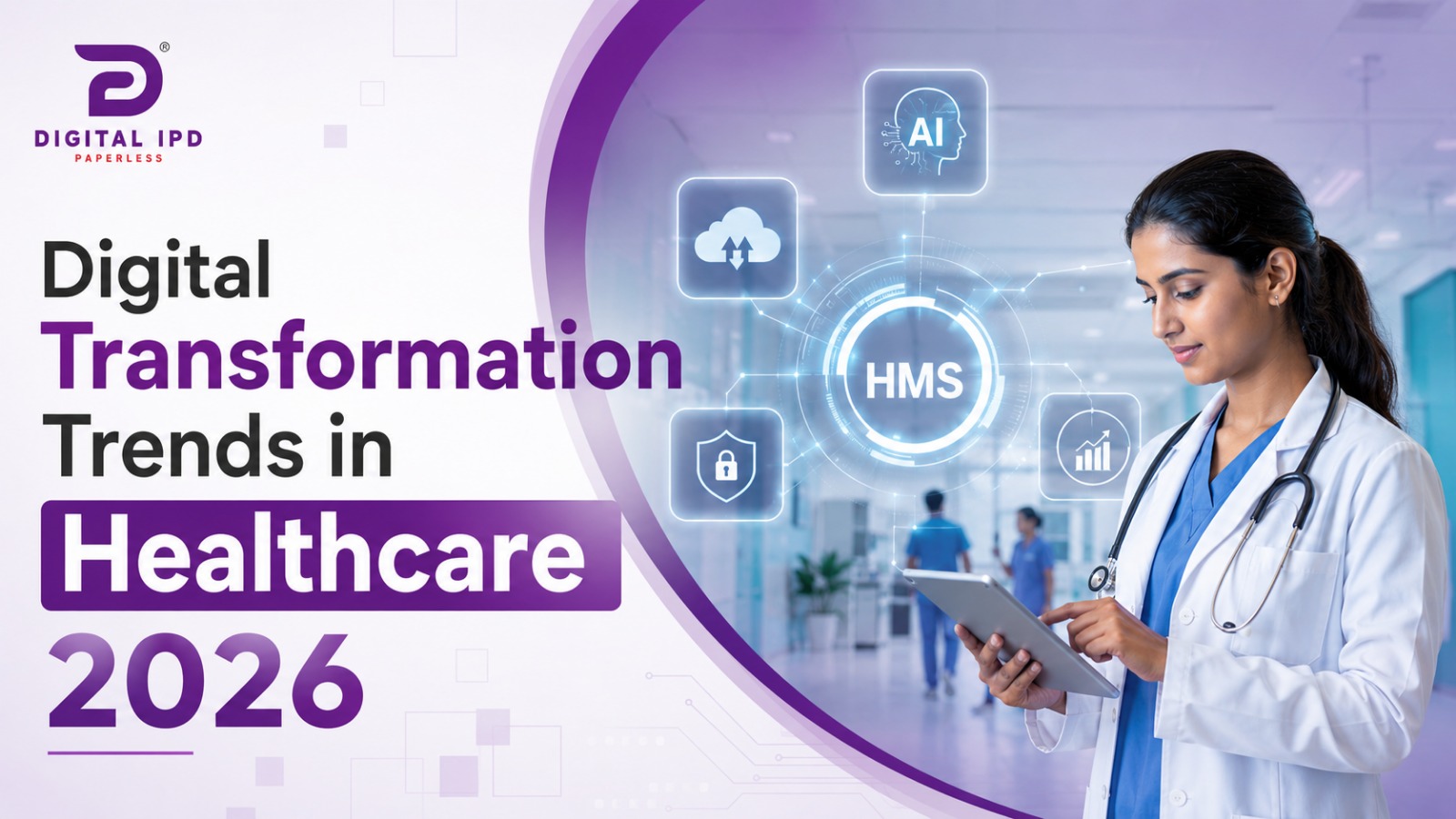
Digital Healthcare Trends 2026
Healthcare is no longer changing slowly. Over the last few years, digital systems have moved from being supportive tools to becoming the foundation of modern healthcare itself. The conversation around digital transformation trends in healthcare 2026 is not only about technology adoption anymore. It is about how hospitals, healthcare startups, students, entrepreneurs, and providers are preparing for a healthcare environment that is becoming more connected, predictive, and patient-focused.
The shift matters because healthcare systems globally are facing the same pressure points: rising patient expectations, workforce shortages, data overload, and growing operational costs. Digital transformation is becoming the bridge between increasing demand and sustainable healthcare delivery.
Why Healthcare Is Moving Faster Toward Digital Systems
Healthcare traditionally evolved slowly because reliability and patient safety always came before experimentation. However, several global shifts accelerated digital adoption. Remote consultations became normal, patients became more comfortable with digital tools, and healthcare businesses realized that manual systems could no longer keep pace with modern demand.
What makes 2026 different is that healthcare organizations are no longer asking whether digital transformation is necessary. They are trying to understand which technologies genuinely improve outcomes and which trends are temporary hype.
This change is happening because healthcare data has become too large and complex for traditional workflows. A single patient interaction now generates records, scans, wearable device data, insurance information, prescriptions, and communication logs. Without integrated systems, providers spend more time managing information than delivering care.
Digital transformation also reflects changing patient behavior. People increasingly expect healthcare experiences to function with the same speed and convenience as banking, e-commerce, or online education. Patients now expect appointment scheduling, digital records, virtual communication, and personalized updates to be accessible without friction.
For entrepreneurs and healthcare business owners, this shift creates both opportunity and pressure. Organizations that adapt intelligently may improve efficiency and patient trust, while outdated systems risk operational delays and lower engagement.
Artificial Intelligence Is Becoming Operational, Not Experimental
Artificial intelligence has existed in healthcare discussions for years, but 2026 represents a transition from isolated testing to operational use. The most important change is that AI is no longer limited to research environments. It is becoming embedded into daily healthcare systems.
AI-driven healthcare tools are increasingly helping with clinical documentation, imaging analysis, patient triage, workflow prioritization, and predictive analytics. However, the real transformation is not simply automation. It is decision support.
For example, healthcare providers are now using predictive systems to identify patterns before problems escalate. Hospitals can detect potential patient deterioration earlier. Clinics can anticipate appointment no-shows. Insurance systems can identify unusual billing patterns faster.
The reason this matters is because healthcare professionals are overwhelmed with administrative burden. AI is gradually reducing repetitive tasks that consume time but add limited clinical value.
At the same time, healthcare organizations are learning that AI implementation is not only a technical challenge. It is also a trust challenge. Systems must remain explainable, transparent, and ethically designed. Healthcare professionals need confidence that AI recommendations are reliable and clinically useful.
This is why the future of AI in healthcare is likely to favor assistive intelligence rather than complete automation. Patients still value human interaction, especially in sensitive medical situations. Technology may support healthcare providers, but it is unlikely to replace trust-based human care entirely.
Telehealth Is Evolving Beyond Video Consultations
Telehealth experienced rapid growth during recent global disruptions, but the healthcare industry is now entering a more mature phase. In 2026, virtual healthcare is becoming less about emergency adaptation and more about integrated care ecosystems.
The biggest transformation is that telehealth platforms are no longer operating independently from healthcare systems. They are becoming part of broader patient engagement strategies that combine remote monitoring, wearable technology, digital prescriptions, and electronic health records.
How Telehealth Is Expanding in Real Healthcare Environments
- Remote patient monitoring is becoming part of long-term care managementHealthcare providers are increasingly using connected devices to track blood pressure, glucose levels, sleep patterns, and heart activity outside hospitals. This approach helps providers identify warning signs earlier while reducing unnecessary in-person visits for stable patients.
- Virtual care is improving access in underserved regionsRural and semi-urban populations often face delays in specialist consultations due to travel limitations or infrastructure gaps. Telehealth systems reduce these barriers by connecting patients with healthcare professionals more efficiently, improving continuity of care across different regions.
- Mental health support is becoming more digitally accessibleDigital therapy platforms and virtual counseling services are helping reduce access limitations in mental healthcare. Many users feel more comfortable discussing mental health concerns through remote systems, especially younger populations already familiar with digital communication.
This evolution is important because telehealth success now depends less on availability and more on integration quality. Poorly connected systems create fragmented care experiences, while integrated ecosystems improve continuity and patient trust.
Interoperability Is Becoming the Core of Smart Healthcare
One of the largest barriers in healthcare has always been disconnected systems. Different hospitals, laboratories, pharmacies, and insurers often operate on separate platforms that struggle to exchange information effectively.
In 2026, interoperability is becoming one of the defining priorities of healthcare transformation. The goal is not simply data sharing. It is coordinated healthcare delivery.
Healthcare providers increasingly understand that isolated systems slow treatment decisions and increase operational inefficiency. Interoperability allows patient records, diagnostic reports, prescriptions, and clinical notes to move more smoothly across healthcare environments.
This shift is especially important for patients with chronic conditions who interact with multiple specialists over time. Without connected systems, repeated testing, delayed communication, and fragmented records become common problems.
Cloud-based healthcare infrastructure is supporting this transition. Instead of storing information in isolated local systems, healthcare organizations are moving toward scalable digital environments that improve accessibility and coordination.
However, interoperability also creates challenges related to cybersecurity and privacy. Healthcare data remains one of the most sensitive forms of personal information. As systems become more connected, healthcare organizations must balance accessibility with stronger security frameworks.
Smart Hospitals Are Redefining Operational Efficiency
The concept of smart hospitals is expanding beyond automation. In 2026, smart healthcare environments are increasingly focused on operational intelligence.
Hospitals are using digital systems to improve patient flow, reduce waiting times, optimize staffing, and monitor resource allocation in real time. These systems help healthcare organizations respond more dynamically to changing demand.
What Smart Healthcare Environments Are Improving
- Digital patient flow systems reduce operational bottlenecksHospitals are increasingly using predictive scheduling and occupancy management tools to reduce congestion. This improves efficiency while helping patients experience shorter waiting periods and smoother movement across departments.
- Connected medical devices improve real-time monitoringSmart monitoring systems allow healthcare staff to track patient conditions continuously rather than relying solely on periodic manual checks. This supports faster response times and better clinical awareness.
- Administrative automation reduces staff workloadDigital workflows for billing, appointment coordination, and documentation reduce repetitive administrative tasks. This allows healthcare professionals to focus more directly on patient interaction and care quality.
What makes smart hospitals important is not only technology adoption but sustainability. Healthcare systems globally face workforce shortages and increasing operational costs. Smart systems help organizations operate more efficiently without compromising patient experience.
Patient-Centered Healthcare Is Becoming the Main Competitive Advantage
Healthcare transformation is no longer entirely provider-driven. Patients are becoming active participants in healthcare decision-making.
In 2026, patient-centered healthcare means more than convenience. It reflects a broader expectation for transparency, personalization, and accessibility.
Patients increasingly expect healthcare providers to offer digital appointment scheduling, online records access, personalized communication, and faster support systems. Organizations that fail to provide these experiences may struggle with patient retention and trust.
At the same time, healthcare consumers are becoming more informed. People now research conditions, treatment options, and provider reviews independently before making healthcare decisions.
This creates a new challenge for healthcare businesses. Digital transformation is not only operational. It is also experiential. Technology must improve how patients feel about the healthcare journey itself.
Healthcare organizations that understand patient behavior patterns are more likely to build stronger engagement systems. Those relying solely on traditional workflows may appear increasingly disconnected from modern expectations.
The Human Side of Digital Healthcare Still Matters
One of the biggest misconceptions about healthcare transformation is that technology alone creates better healthcare. In reality, digital systems succeed only when they support human-centered care.
Healthcare professionals continue to play the central role in patient trust, emotional reassurance, and decision-making. Technology may improve efficiency, but empathy remains irreplaceable.
This is especially important in sensitive healthcare areas such as chronic illness management, elderly care, oncology, and mental health support. Patients still value clarity, patience, and human understanding.
The healthcare organizations succeeding in digital transformation are usually the ones balancing technological advancement with emotional intelligence. They use digital tools to simplify complexity rather than create distance between patients and providers.
Conclusion
The most important healthcare transformation trend in 2026 is not a single technology. It is the shift toward connected, intelligent, and patient-centered healthcare ecosystems. Artificial intelligence, telehealth, interoperability, and smart hospital systems are all part of a broader movement toward more adaptive healthcare delivery.
For students, entrepreneurs, healthcare providers, and business leaders, understanding these trends matters because digital transformation is reshaping how healthcare operates globally. Organizations that focus on thoughtful implementation, patient trust, and operational integration are likely to adapt more successfully in the years ahead.
Frequently Asked Questions (FAQs)
1. Why is digital transformation becoming essential in healthcare by 2026?
Digital healthcare systems are becoming essential because hospitals and healthcare providers are handling larger amounts of patient data, operational pressure, and rising patient expectations. Modern healthcare environments now rely on connected systems, automation, and predictive technologies to improve efficiency and patient experience. These changes are helping healthcare organizations build more adaptive and patient-centered ecosystems.
2. How is artificial intelligence changing healthcare operations?
Artificial intelligence is improving healthcare by reducing repetitive administrative work and supporting faster clinical decision-making. AI-driven systems can identify patterns in patient data, improve workflow prioritization, and support predictive healthcare management. This shift is helping healthcare systems become more efficient while improving operational intelligence.
3. What role does telehealth play in modern healthcare systems?
Telehealth is no longer limited to video consultations. Modern virtual healthcare systems now include remote patient monitoring, digital prescriptions, and connected patient engagement tools. These systems improve healthcare accessibility and help providers manage long-term care more efficiently through integrated digital healthcare infrastructure.
4. Why is interoperability important in digital healthcare transformation?
Interoperability allows different healthcare systems to exchange patient information more efficiently. This reduces fragmented care, repeated testing, and communication delays between providers. Connected healthcare ecosystems improve coordination and help create smoother patient journeys across hospitals, clinics, and diagnostic centers.
5. What are smart hospitals and how do they improve healthcare delivery?
Smart hospitals use connected technologies, predictive systems, and digital workflows to improve operational efficiency. These healthcare environments optimize patient flow, reduce waiting times, and support real-time monitoring. Smart infrastructure also helps healthcare organizations manage resources more effectively during high-demand situations.
6. How does digital transformation improve patient experience?
Digital transformation improves patient experience by making healthcare more accessible, transparent, and personalized. Features like online scheduling, digital health records, and automated communication systems create smoother interactions between patients and providers. These systems support patient-centered healthcare and improve long-term engagement.
7. What challenges do healthcare organizations face during digital transformation?
Healthcare providers often face challenges related to cybersecurity, staff training, system integration, and operational adaptation. Many organizations still use outdated systems that are difficult to connect with modern platforms. Successful transformation requires balanced implementation, workflow planning, and long-term digital healthcare strategies.
8. How are wearable devices influencing healthcare trends in 2026?
Wearable devices are helping healthcare systems collect real-time patient data outside hospitals. These technologies support preventive healthcare by tracking health patterns such as heart activity, sleep quality, and physical movement. This improves remote patient monitoring and allows healthcare providers to respond earlier to potential risks.
9. Why are healthcare businesses investing heavily in cloud-based systems?
Cloud-based healthcare infrastructure improves scalability, accessibility, and coordination across healthcare environments. Instead of storing information in isolated systems, organizations can securely access patient data from multiple locations. This supports interoperability and improves overall healthcare system efficiency.
10. What skills will become important in the future of digital healthcare?
The future healthcare industry will increasingly value digital literacy, data interpretation, patient communication, and system integration understanding. Healthcare professionals, entrepreneurs, and students who understand digital healthcare ecosystems, AI-supported workflows, and patient engagement technologies are likely to adapt more successfully to future healthcare environments.