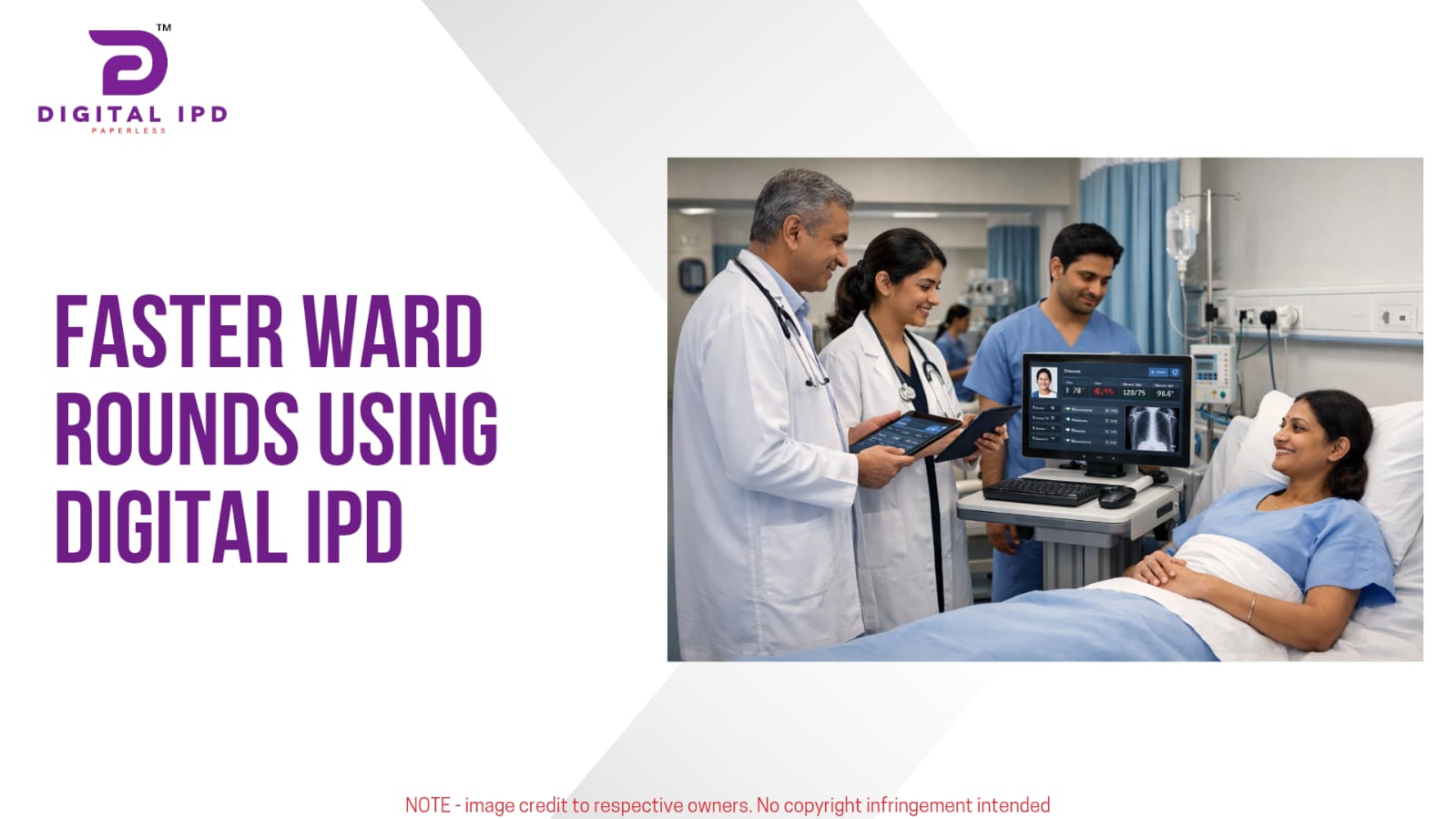
If you have ever witnessed a morning ward round in a typical hospital you know the scene well. The dedicated team of doctors and nurses moves with purpose but their progress is punctuated by pauses. They halt to locate a missing paper file. They stop to decipher handwritten notes from the night shift. They wait for a runner to fetch lab results from a distant department. This is not just a minor hiccup; it is the daily reality of a paper bound system. These lost minutes accumulate eating away at valuable time that should belong to the patient. This is precisely where a Digital Inpatient Department (Digital IPD) system steps in, quietly revolutionizing this core ritual. It transforms those fragmented, chaotic rounds into coherent, efficient and deeply human clinical conversations.
Why Paper Fails in Hospitals?
Why does the traditional method feel so cumbersome? The answer lies in the nature of paper itself. A patient's physical file is a singular object. It can only be in one place, used by one person at a time. When a doctor is updating it, the nurse must wait to record vitals. When a consultant needs to review it the discharge process grinds to a halt. Critical information lives in separate unconnected islands, the doctor's notes in one pile, nursing charts in another, investigation reports in a third. Staff often duplicate the same information across different forms, a tedious and error prone process. The most tangible cost is the sheer time spent searching waiting and coordinating around that one file. It is a system that functions, but at a steep price paid in efficiency accuracy and clinician energy.
One Patient, One Digital Record:
A Digital IPD system dismantles these barriers by creating a single authoritative digital version of the patient's journey. Imagine it as the central heartbeat of patient information for the hospital. From the moment of admission, every piece of data; past history, new observations, prescribed drugs, lab values and nurse assessments, flows into a secure unified digital record. This record is not stationary; it is alive and accessible in real time. This shift from static paper to dynamic digital data is the fundamental change that makes everything else possible.
Digital Ward Rounds:
What does this change look like in practice? Let us follow a team using a Digital IPD.
- Everything at Your Fingertips: The frantic search ends. With a secured device the clinician calls up the patient's entire story instantly. Yesterday's progress, current medication lists, live vitals from the monitor and a pathology report that just cleared are visible in one glance. Decisions are informed by a complete, current picture.
- Clear Documentation: Illegible handwriting becomes a thing of the past. Clinicians enter notes directly into the system during the round itself. These entries are clear, structured and immediately available to the entire authorized team the second they are saved, eliminating dangerous delays in communication.
- Teamwork without Traffic Jams: The bottleneck of the single file disappears. The doctor can be reviewing notes while the nurse simultaneously documents care on another tablet. The pharmacy can process new orders and the dietitian can update plans all working from the same real time record without interrupting each other.
- The Patient Regains Centre Stage: When the administrative clutter recedes the real work shines through. The care team can redirect their full attention to the person in the bed. Conversations become more meaningful, eye contact increases and the patient feels they are the sole focus, because for those moments, they truly are.
The Real World Impact:
The benefit of a faster round is just the starting point. The ripple effects touch every aspect of care:
- Prompt and Precise Care: With immediate data access, clinical decisions can be made sooner potentially improving outcomes.
- A Safer Environment: Structured digital entries drastically cut down on errors from misread notes or missed information.
- Streamlined Accreditation: Automated time stamped records that align with standards like NABH turn compliance from a frantic pre audit scramble into a natural part of the daily workflow.
- Trust through Transparency: Patients interact with a coordinated team. They sense the efficiency, which builds confidence. The potential for clearer communication and shared information fosters a stronger partnership.
- Reigniting Professional Joy: Freeing medical staff from tedious clerical tasks allows them to focus on what they do best practicing medicine. This can reduce fatigue and rebuild the human connections that are essential for healing.
Making the Change Successfully:
Moving to a Digital IPD is a significant step and its success depends on thoughtful execution. It involves selecting a solution designed for the realities of Indian healthcare, one that understands local workflows and challenges. Crucially it requires bringing doctors and nurses into the conversation early on. Starting with a single ward or unit allows the team to adapt provide feedback and see the benefits firsthand creating internal champions for the change. The objective is not to overturn good medicine but to remove the unnecessary friction that paper introduces, allowing excellent clinical practice to flow more smoothly.
In the end the success of a Digital IPD is measured in quiet moments. It is the calm confidence of a nurse who has all the information she needs. It is the relieved face of a relative who receives timely updates. It is the doctor who can leave the ward knowing the team is perfectly aligned. For hospitals across India looking toward a sustainable future, achieving faster, smarter ward rounds is a powerful first milestone. It represents a crucial shift in priority; from being busy managing documents to being truly present for patients.