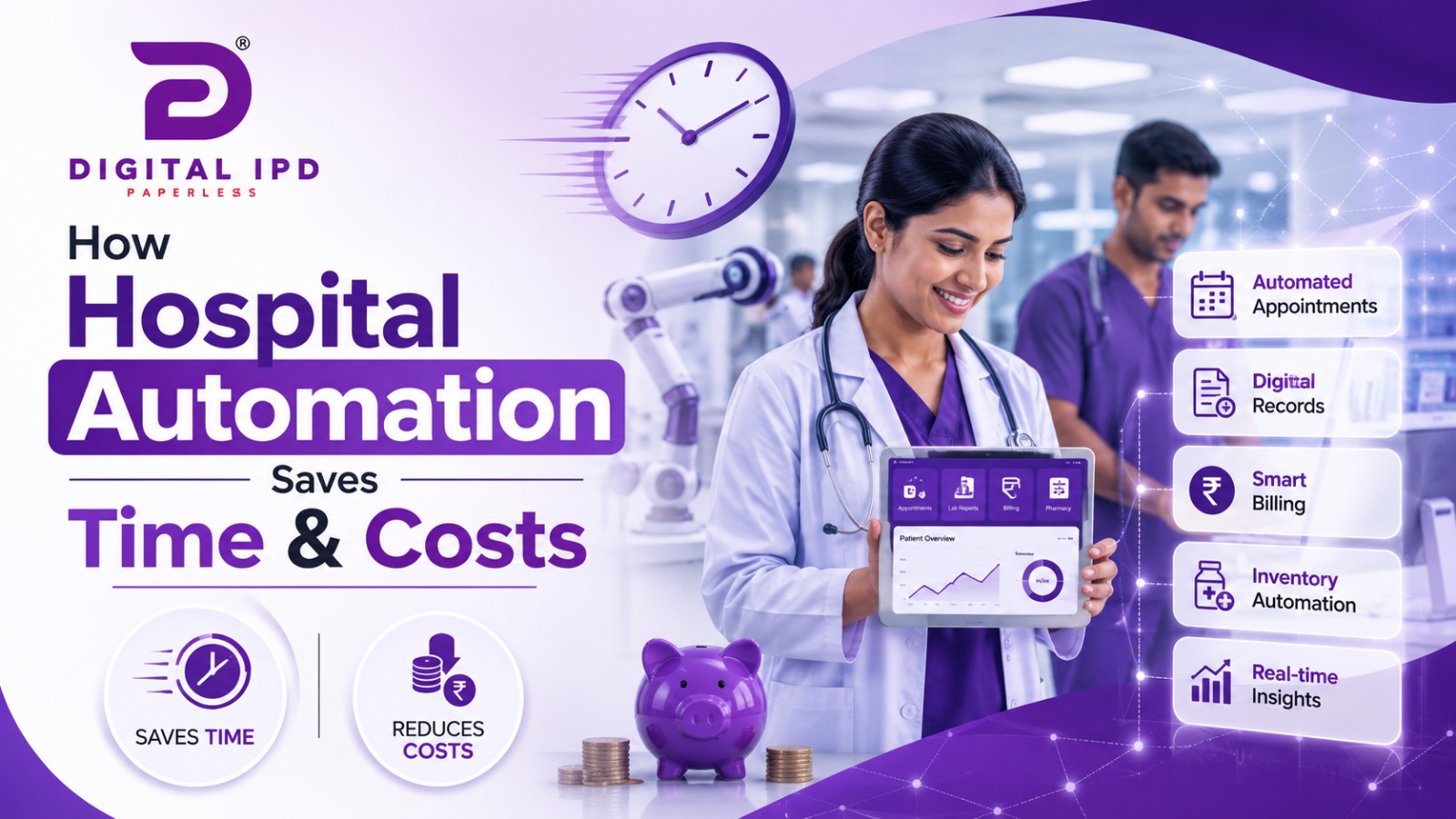
Healthcare systems are under constant pressure to manage growing patient volumes, rising operational expenses, and increasing expectations for faster service. In many hospitals, delays are not caused by lack of expertise but by inefficient workflows, manual processes, and disconnected systems. This is where hospital automation becomes important. Modern hospitals are increasingly adopting a hospital automation system and advanced hospital automation technology to reduce repetitive tasks, improve coordination, and save both time and costs across departments.
Why Hospital Operations Become Slow and Expensive Over Time
Hospital systems often become inefficient gradually rather than suddenly. As patient numbers increase, administrative responsibilities grow faster than manual systems can handle. Appointment scheduling, billing, inventory tracking, and patient record management begin to overlap, creating delays that affect both staff and patients.
In traditional environments, multiple departments may rely on separate systems or paper-based records. This slows communication and increases the risk of duplication. For example, a patient visiting an emergency unit may need to repeat information already recorded in another department because systems are not synchronized.
This issue becomes more visible in larger healthcare facilities where hundreds of daily interactions occur simultaneously. Staff spend significant time on coordination rather than direct patient care. Over months and years, these inefficiencies increase labor costs, delay services, and reduce operational productivity.
A properly designed hospital automation system changes this dynamic by connecting workflows into a unified structure. Instead of relying on repetitive manual actions, automation helps departments communicate instantly, reducing unnecessary delays and administrative burden.
How Hospital Automation Improves Workflow Efficiency
The most noticeable advantage of hospital automation is the improvement in workflow efficiency. Automation does not replace healthcare professionals. Instead, it reduces the time spent on repetitive operational tasks.
For example, patient registration systems can automatically update records across departments. Billing software can synchronize with pharmacy and diagnostic systems without requiring multiple manual entries. This reduces waiting time for patients and minimizes operational confusion for staff.
Areas Where Automation Reduces Time Loss
- Automated patient registration reduces repetitive paperworkInstead of filling out multiple forms at different departments, patients enter information once, allowing systems to update records automatically. This reduces administrative workload and improves patient movement across services.
- Smart scheduling systems improve appointment managementAutomated scheduling tools reduce overlapping appointments and optimize doctor availability. This helps hospitals manage patient flow more efficiently during busy hours.
- Digital inventory tracking prevents supply delaysA connected inventory system monitors medicine and equipment usage in real time. This prevents shortages and reduces unnecessary emergency purchases.
- Integrated billing systems reduce financial processing timeAutomation minimizes billing errors and accelerates insurance verification, reducing delays in payment cycles and administrative follow-ups.
These changes may seem operational on the surface, but together they significantly reduce workflow friction across the healthcare environment.
The Financial Impact of Hospital Automation Technology
One of the main reasons healthcare providers invest in hospital automation technology is long-term cost control. Many operational expenses in hospitals come from inefficiency rather than direct medical care.
Manual systems often create hidden costs through duplicated work, billing errors, delayed communication, and inventory mismanagement. Hospitals may overstock supplies because they lack accurate tracking systems. Administrative teams may spend hours correcting avoidable documentation mistakes.
Automation helps reduce these losses by improving accuracy and reducing dependency on repetitive human intervention. Over time, hospitals can allocate more resources toward patient care rather than administrative corrections.
The financial benefits become more visible in areas such as:
- Reduced paperwork and storage costs
- Lower administrative staffing pressure
- Faster billing and payment cycles
- Reduced resource wastage
- Better utilization of medical equipment
This is especially important in healthcare environments where operational efficiency directly affects sustainability and patient satisfaction.
How Automation Changes Real-Life Patient Experiences
Patients often judge healthcare quality based on time, communication, and coordination rather than medical outcomes alone. Long waiting times, repeated paperwork, and confusion between departments create frustration even when treatment quality is high.
A modern hospital automation system improves these experiences by creating smoother interactions. Patients receive faster appointment confirmations, digital reports, and automated reminders that reduce missed visits.
Consider a real-world scenario where a patient visits a hospital for diagnostics and consultation. In a manual setup, delays may occur between registration, lab processing, billing, and doctor coordination. In an automated system, these departments communicate instantly, reducing waiting periods significantly.
Automation also improves transparency. Patients can access records digitally, track appointments, and receive updates without repeatedly contacting hospital staff.
This becomes particularly valuable in urban healthcare systems where hospitals manage large patient volumes daily. Automation helps healthcare providers maintain service quality without increasing operational chaos.
Why Staff Productivity Improves With Automation
Healthcare professionals often spend large portions of their day handling documentation, scheduling adjustments, and administrative coordination. Over time, this affects productivity and increases burnout.
Automation reduces this pressure by simplifying routine tasks. Nurses spend less time updating repetitive records. Administrative staff handle fewer manual billing corrections. Doctors gain quicker access to patient history and diagnostic reports.
Operational Areas Where Staff Efficiency Improves
- Centralized patient records reduce information delaysHealthcare teams can access updated records instantly, improving coordination between departments and reducing unnecessary communication gaps.
- Automated reporting improves decision-making speedReal-time dashboards help administrators track patient flow, resource usage, and operational bottlenecks more effectively.
- Digital communication systems reduce manual coordinationStaff members spend less time transferring information manually between departments, improving response times.
- Workflow automation reduces repetitive administrative pressureTasks such as reminders, appointment confirmations, and billing notifications are handled automatically, allowing staff to focus on patient care.
These improvements help hospitals create more stable operational environments while improving employee efficiency and satisfaction.
Challenges Hospitals Face During Automation Adoption
Although automation offers clear advantages, implementation is not always simple. Many hospitals operate on older systems that were not designed for digital integration. Transitioning to automation requires time, investment, and staff adaptation.
One of the biggest challenges is resistance to change. Healthcare professionals accustomed to traditional workflows may initially find automated systems difficult to adjust to. Training becomes essential to ensure smooth adoption.
Data security is another major consideration. Since healthcare systems handle sensitive patient information, hospitals must ensure that automated platforms maintain strong security standards and controlled access.
Smaller healthcare facilities may also face budget limitations during implementation. However, many organizations now adopt automation gradually rather than transforming all systems at once.
Understanding these practical challenges is important because successful automation depends not only on technology but also on organizational readiness and workflow planning.
How Hospital Automation Supports Long-Term Healthcare Trends
Healthcare systems worldwide are moving toward more connected, data-driven environments. Patients increasingly expect faster communication, digital accessibility, and personalized care experiences.
A strong hospital automation technology framework supports this shift by enabling healthcare providers to scale operations more effectively. Automation also improves healthcare analytics by collecting operational data in real time.
This helps hospitals identify inefficiencies, optimize staffing patterns, and predict resource demand more accurately. Over time, automation contributes to smarter healthcare planning rather than simply reducing manual work.
Hospitals that adapt early often gain long-term operational advantages because they can respond more efficiently to changing patient expectations and healthcare demands.
The Balance Between Technology and Human Care
One common misconception is that automation reduces human interaction in healthcare. In reality, effective automation often creates more room for meaningful patient engagement.
When staff spend less time on repetitive administrative tasks, they can focus more on communication, coordination, and patient support. Technology handles operational repetition while healthcare professionals focus on clinical and emotional care.
This balance is important because hospitals function best when efficiency supports human-centered service rather than replacing it.
Automation should therefore be viewed as a support system that improves healthcare delivery rather than a replacement for medical expertise.
Conclusion
Hospital automation is transforming healthcare by improving operational efficiency, reducing administrative burden, and helping hospitals manage rising costs more effectively. A well-designed hospital automation system creates faster workflows, improves coordination, and enhances patient experiences without compromising care quality.
As healthcare environments continue evolving, adopting reliable hospital automation technology will become increasingly important for organizations aiming to improve sustainability, efficiency, and long-term service quality.
Frequently Asked Questions (FAQs)
1. How does hospital automation reduce operational delays?
A well-designed hospital automation system reduces delays by connecting departments through real-time data sharing and workflow synchronization. Instead of relying on manual coordination, automated systems improve communication speed and support better healthcare workflow management. This helps hospitals process appointments, billing, and patient records more efficiently.
2. Why is hospital automation technology becoming important in modern healthcare?
Hospital automation technology is becoming essential because healthcare systems are handling larger patient volumes and more complex operations. Automation improves efficiency, reduces repetitive administrative work, and supports better digital healthcare infrastructure for long-term operational stability.
3. Can hospital automation improve patient experience?
Yes, hospital automation improves patient experience by reducing waiting times, simplifying appointment scheduling, and improving communication between departments. Automated systems also support smoother patient management solutions, helping patients access services more efficiently.
4. How does automation help hospitals save costs over time?
Automation reduces unnecessary operational expenses by minimizing paperwork, billing errors, and inventory mismanagement. A connected hospital automation system improves resource utilization and supports smarter healthcare cost optimization, helping hospitals manage long-term financial pressure more effectively.
5. What challenges do hospitals face when implementing automation systems?
One major challenge is integrating new technology with existing systems. Staff training and workflow adaptation also require time. Successful hospital automation technology adoption depends on planning, gradual implementation, and maintaining strong healthcare data management practices.
6. Does hospital automation replace healthcare professionals?
No, hospital automation is designed to support healthcare professionals rather than replace them. Automation handles repetitive administrative tasks, allowing doctors and staff to focus more on patient care and improving overall clinical workflow efficiency.
7. How does automation improve hospital inventory management?
Automated inventory systems track medicine and equipment usage in real time. This reduces shortages, prevents overstocking, and supports better resource management in healthcare. It also helps hospitals avoid unnecessary emergency purchases and operational waste.
8. What role does automation play in digital patient records?
A hospital automation system helps centralize patient records so healthcare providers can access updated information instantly. This improves coordination, reduces duplication, and supports better electronic health record integration across departments.
9. Is hospital automation useful for smaller healthcare facilities?
Yes, smaller healthcare providers also benefit from hospital automation technology because it helps simplify operations and improve efficiency. Many facilities adopt automation gradually through scalable smart healthcare systems that fit their operational size and budget.
10. How does hospital automation support future healthcare trends?
Automation supports future healthcare by enabling data-driven decision-making, faster communication, and better patient coordination. As healthcare systems become more digital, hospital automation helps organizations adapt to evolving connected healthcare environments and growing patient expectations.