Inpatient care has always depended on timing, accuracy, and coordination. Every update matters, whether it is a change in vitals, medication, or clinical notes. Yet, in many hospitals, data still moves slower than the care itself. Information is written, transferred, updated, and sometimes delayed. This gap between action and documentation is where inefficiencies begin to build.
Real-time clinical data capture is slowly closing that gap. Instead of recording information after the fact, hospitals are beginning to capture and update it as events happen. This shift may seem operational on the surface, but it changes how care is delivered inside inpatient departments.
What Real-Time Data Capture Means In IPD
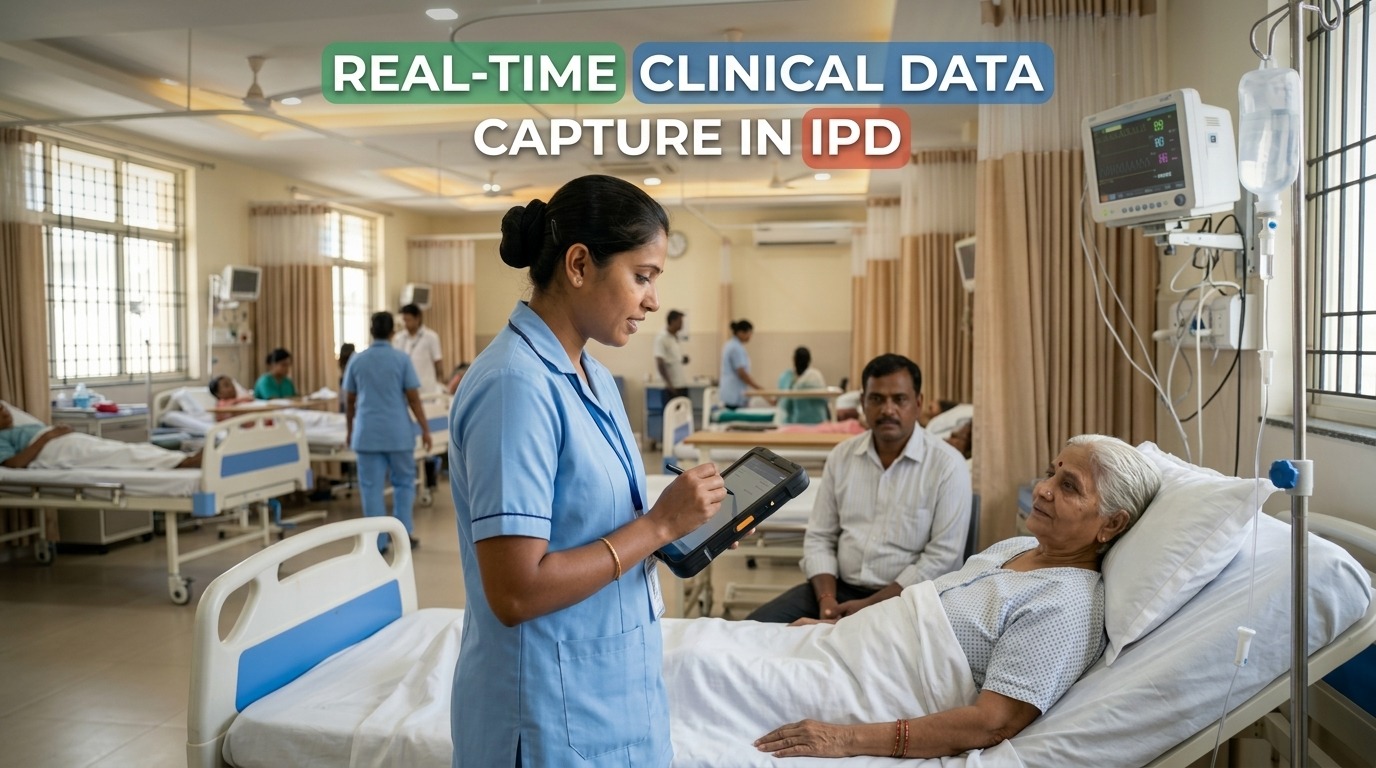
Real-time clinical data capture in IPD refers to recording patient information instantly during care, rather than documenting it later. This includes vitals, treatment updates, medication records, and clinical observations.
With real-time EMR data capture in hospitals, information flows directly into the system as soon as it is generated. Doctors, nurses, and support staff no longer depend on delayed updates or manual transfers between departments.
This is closely tied to inpatient data capture systems in hospitals, where digital tools are used to ensure that every clinical interaction is recorded accurately and immediately. Instead of fragmented records, hospitals move toward a continuous and connected data environment.
Why This Shift Matters In Inpatient Care
In inpatient settings, even small delays can affect decisions. A missed update or delayed entry can disrupt treatment timelines or create confusion between teams.
This is where real-time patient monitoring data integration IPD becomes important. When monitoring systems are connected directly to clinical records, updates happen automatically. Doctors do not have to wait for reports. Nurses do not have to re-enter data. The system reflects the patient’s condition as it evolves.
The impact becomes visible in:
- Faster clinical decision-making
- Reduced communication gaps between departments
- More accurate and up-to-date patient records
- Better coordination during critical care situations
Over time, this reduces dependency on manual tracking and improves overall workflow reliability.
How Real-Time Data Capture Works Inside Hospitals
The process is not about adding more systems. It is about connecting existing ones in a way that allows information to move without delay.
Hospitals using clinical data capture software for IPD management typically follow a structured flow where data is captured, processed, and shared across departments in real time.
Key components include:
- Integration with monitoring devices
- Direct input through digital interfaces
- Automated updates into EMR systems
- Instant access across departments
This creates a system where real-time healthcare data synchronization inpatient units becomes part of everyday operations rather than a separate task.
Where It Makes The Biggest Difference
Not every area of the hospital benefits equally. Some functions see immediate improvement because they rely heavily on timing and coordination.
Patient Monitoring And Vitals Tracking
With connected systems, vitals are recorded automatically and reflected instantly in patient records. This supports faster response times and reduces manual entry errors.
Medication And Treatment Updates
Medication changes are updated in real time, ensuring that every team member is working with the latest information. This reduces confusion and improves safety.
Clinical Documentation
Through automated clinical documentation in inpatient care, notes are captured alongside care delivery rather than after it. This reduces backlog and improves accuracy.
Department Coordination
When systems are connected, updates move across departments without repeated manual entry. This is where hospital IPD data capture workflow automation plays a key role.
Case Studies: How Real-Time Capture Changes Daily Operations
Case Study 1: Reducing Delays In Critical Care
In a high-dependency unit, patient monitoring data was previously recorded manually at intervals. Nurses had to observe, note, and then update records, which created small but consistent delays.
After implementing systems connected to real-time patient monitoring data integration IPD, vitals were captured directly into the system. Doctors could see updates instantly without waiting for manual entry.
The change was not dramatic in one moment, but over time, response times improved. Clinical decisions began to happen closer to the actual event rather than after a delay.
Case Study 2: Improving Documentation Accuracy
A multi-specialty hospital faced issues with incomplete or delayed documentation. Doctors often updated records after rounds, relying on memory and notes.
With automated clinical documentation in inpatient care, updates were captured during interactions. Clinical notes became more consistent, and missing entries reduced significantly.
The workflow felt less fragmented. Documentation became part of care rather than a separate task at the end of the day.
Case Study 3: Streamlining Department Coordination
In a hospital managing high patient volumes, data had to move between departments multiple times. Lab results, medication updates, and treatment changes often required manual coordination.
By introducing digital inpatient data recording systems healthcare, information began to flow automatically. Departments accessed the same updated records without repeated communication.
The shift reduced back-and-forth coordination and allowed teams to focus more on patient care.
Challenges Hospitals Still Face
Despite its benefits, adoption is not without challenges. The transition requires both technical and operational alignment.
Common concerns include:
- Integration with existing hospital systems
- Training staff to adapt to new workflows
- Ensuring data accuracy during transition
- Maintaining data security and privacy
Hospitals need to approach this shift carefully, ensuring that smart hospital data capture solutions for IPD fit their existing processes rather than disrupt them.
FAQs
1. What is real-time clinical data capture in IPD?
It refers to recording patient data instantly during care instead of updating it later.
2. How does real-time EMR data capture help hospitals?
Real-time EMR data capture in hospitals ensures that patient records are always up to date and accessible.
3. What are inpatient data capture systems?
Inpatient data capture systems in hospitals are digital tools used to record and manage patient data continuously.
4. How does automation improve clinical documentation?
Automated clinical documentation in inpatient care reduces manual effort and improves accuracy.
5. Why is data synchronization important in IPD?
Real-time healthcare data synchronization inpatient units ensures all departments work with the same updated information.
6. What challenges exist in implementing real-time systems?
Integration, training, and data security are common challenges.
7. Can real-time data capture reduce workload?
Yes, it reduces repetitive data entry and improves workflow efficiency.
8. What is hospital IPD workflow automation?
Hospital IPD data capture workflow automation refers to automating how patient data moves across departments.
9. Are digital inpatient systems reliable?
Yes, when properly implemented, they improve accuracy and reduce errors.
10. What is the future of real-time data capture in hospitals?
It will become more integrated, predictive, and essential for efficient inpatient care.
Conclusion
Real-time clinical data capture in IPD is not just a technical upgrade. It is a shift in how hospitals operate. By reducing delays, improving accuracy, and connecting workflows, it allows care to move at the same pace as information. Over time, this creates a system that is more responsive, more reliable, and better aligned with patient needs.