Picture nurse Priya, a 12 year veteran in a bustling Delhi hospital. She is not checking pulses today, she is hunting for a missing patient file, again. Her voice is tired, three hours per shift lost to paperwork. That is time I could have spent holding a patient’s hand.
This scene plays out daily across India, revealing an uncomfortable truth medical records are not just files; they are the invisible backbone of patient care.
Patient centered care:
What does patient first really mean in our hospitals? It is simple:
- Time matters: Families should not pace corridors for discharge papers.
- Safety is not optional: Doctors cannot treat ghosts when records vanish.
- Trust is earned: Knowing your medical history is handled carefully, not dumped in storage.
Yet walk into any crowded government hospital. See queues spilling into parking lots. Watch nurses drowning in Paper Mountains. Those medical files, they are human stories; each fever chart, surgery note and prescription holds healing clues. But paper betrays these stories, pages go missing, doctor’s scribbles turn unreadable, test reports arrive late. Suddenly, patient care feels like solving a puzzle blindfolded.
Tangled in paper:
A doctor from Chennai shares every physician’s nightmare; Last Tuesday, I needed to decide on a critical insulin dose. The file Lost between wards. Let us count paper’s real price:
- Stolen moments: Doctors spend more time writing than talking to patients.
- Money down the drain: Small hospitals waste ₹10 lakh per year on paper, storage and retrieval staff.
- Danger zones: Faded prescriptions cause dosage errors. Missing forms mean failed NABH audits.
Hospital administrator puts it plainly: With NABH rules tightening, paper compliance feels like running on a treadmill.
Digital dawn:
Now imagine a different scene:
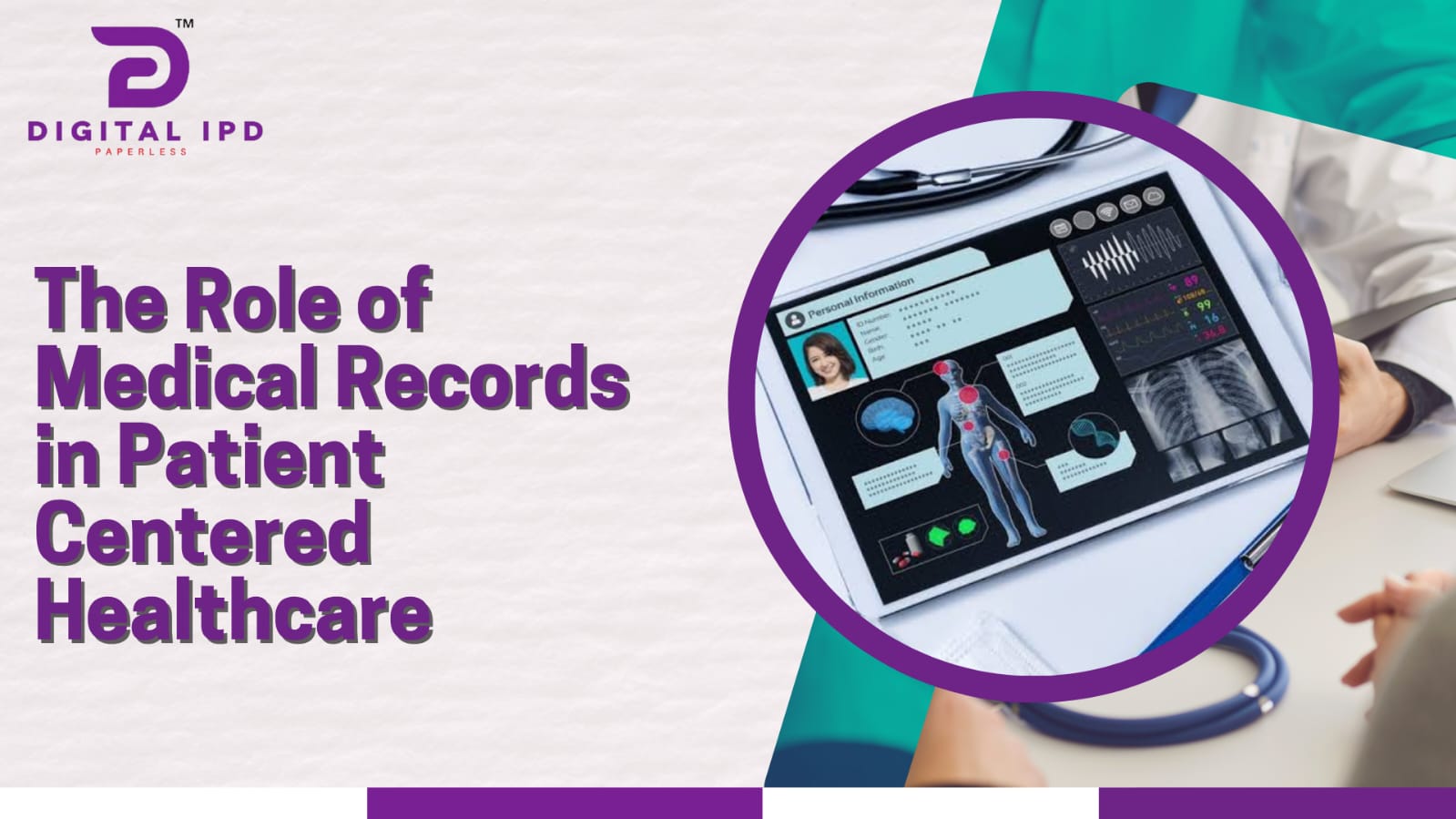
- Priya taps a tablet instantly pulls a patient’s history ( Digital Ipd ).
- Manoj gets alerts when a patient’s oxygen dips.
- Discharge summaries print automatically as billing syncs.
This is not sci fi; it is today’s smarter hospitals.
Digital records power care:
- Stop the chase: Nurses find files in seconds.
- Safety shields: Systems flag allergies before prescriptions.
- Patients empowered: Families check reports online, skip queues.
- Audit ready NABH reports generated in minutes.
Take Jaipur’s famous hospital. Going paperless saved ₹5 lakhs per year. But their head nurse says the real win was unexpected. When staff are not buried in files, they finally see patients.
Technology feels human: Skeptics worry screens will replace compassion. But here is the reality; digital tools ( Digital Ipd ) return humanity to healthcare.
Think about:
- A mother accessing her child’s vaccine history during a midnight emergency.
- A doctor listening instead of scribbling.
- A pharmacist instantly verifying prescriptions.
As India embraces digital health, hospitals are not just becoming efficient; they are becoming kinder places. Less like government offices, more like healing homes.
The last word:
Those dusty files in hospital basements, they are not dead paperwork. They are diaries of survival; stories of pain, hope and second chances.
By freeing these stories from paper prisons, we honor:
- The grandmother trusting us with her history.
- The resident working a 36 hour shift.
- The nurse skipping lunch to check on patients.
Tomorrow’s healthcare breakthroughs will not just come from labs. They will start when hospitals finally learn to remember; accurately and instantly.
True patient care begins when records stop being files and start being lifelines.