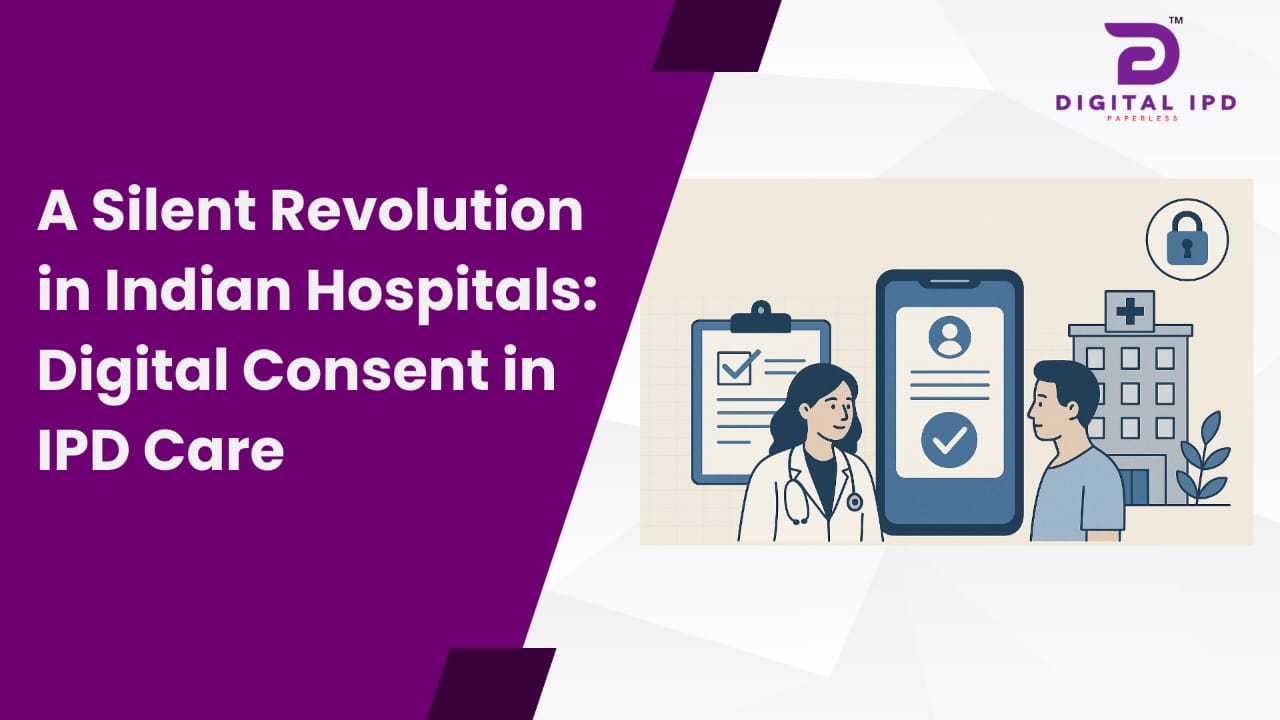
Walk into the inpatient department (IPD) of any busy hospital in India and you can feel the pulse of healthcare. It is a place of healing, hope and immense complexity. Behind the scenes, however, lies a web of challenges: towering stacks of paper files, delays in admitting patients and the constant worry of keeping sensitive information safe. A critical change is quietly addressing these issues, focusing on one core process: managing patient consent. Integrating digital consent directly into IPD workflows is not merely a tech upgrade; it is a shift towards a more respectful, efficient and secure healthcare system for everyone.
The true cost:
For decades, the consent process in Indian hospitals has followed a familiar, frustrating script. Picture a family, already weighed down by worry, being handed a dense form filled with complex medical terms. A busy doctor does their best to explain, but in a stressful environment, how much can truly be understood? The signed form then joins a physical file, at risk of being misplaced, damaged or seen by unauthorized eyes. This system is not just outdated; it is inherently fragile.
The administrative strain is enormous. Valuable staff hours are consumed hunting for files, chasing down signatures from anxious relatives and managing storage rooms. This logistical chaos has a direct human cost: it delays crucial surgeries, slows down bed turnover and ultimately postpones a patient's journey back home. In a nation where timely care is paramount, these bottlenecks are simply unacceptable.
The digital shift:
Thankfully, modern digital solutions for IPD management ( Digital Ipd ) are turning this ordeal into a seamless experience. An integrated consent module transforms a paper based problem into a smooth digital interaction.
- Understanding, not just signing: Instead of an intimidating paper form, patients and families can review information on a tablet. This digital format can include videos, diagrams and explanations in their preferred language, making complex procedures clear. This approach empowers individuals, making them active participants in their own care decisions rather than passive signatories.
- Instant access, zero delays: The moment a digital signature is given, the consent form is instantly dated and locked into the patient's electronic health record (EHR). There are no files to lose. A surgeon can confirm consent from the operating theatre, a nurse can verify it from the ward and an administrator can see it from the front desk. This real time access is a game changer for hospital efficiency, smoothing out schedules and accelerating patient flow from admission to discharge.
- Building a partnership of trust: Perhaps the most significant benefit is the fostering of trust. A digital process allows patients to review information at their own pace in a less stressful setting, leading to more meaningful conversations with their doctors. It shifts the dynamic from a transaction to a partnership, which is the cornerstone of effective healthcare.
DPDP act compliance:
The introduction of India's Digital Personal Data Protection Act (DPDP Act) 2023, has made robust consent management a legal imperative, not just a best practice. The law is clear: consent must be free, specific, informed and unambiguous. Paper based systems struggle immensely to meet these stringent standards reliably.
An integrated digital consent platform is built for this new era. It ensures compliance by:
- Providing clear, specific choices for patients to agree to.
- Maintaining a tamper proof, verifiable audit trail of every consent given.
- Including straightforward options for patients to withdraw consent if needed.
- Protecting data with strong encryption and strict access controls.
With potential penalties for non-compliance being significant, a digital system turns a complex legal requirement into a simple, automated and secure part of daily hospital routine.
Consent at every step:
The real magic happens when digital consent is not a standalone app, but a thread woven throughout the entire fabric of an IPD management system, like the ecosystem offered by Digital Ipd. It connects every stage of care:
- From admission: A digital record is created from the very first moment.
- Through treatment: Doctors can request procedure specific consents that are immediately available to the entire care team.
- To discharge: With all documents digitally verified and present, the discharge process is swift, freeing up beds for the next patients in line.
This end to end integration breaks down walls between hospitals departments, ensuring everyone operates from a single, reliable source of truth.
Technology for care:
It is vital to remember that digital consent does not replace the essential conversation between a doctor and their patient. On the contrary, it supports it. By handling the administrative burden, the technology gives healthcare professionals more time to do what no machine ever can: offer compassion, provide clear explanations and answer questions with patience. The human touch remains the priority, now powerfully augmented by technology.
The way ahead:
Adopting integrated digital consent is no longer a question of if, but when. For Indian hospitals striving for excellence, it is the clear path forward. This convergence of operational efficiency, unwavering compliance and superior patient experience is the new standard.
It represents a move away from cluttered paper piles towards a smoother, more trustworthy way of healing. It gives nurses and doctors the gift of time; time to focus on their patients. And it gives patients the clarity, security and respect they have always deserved. In the end, the best technology is that which quietly supports the timeless values of care and human connection.