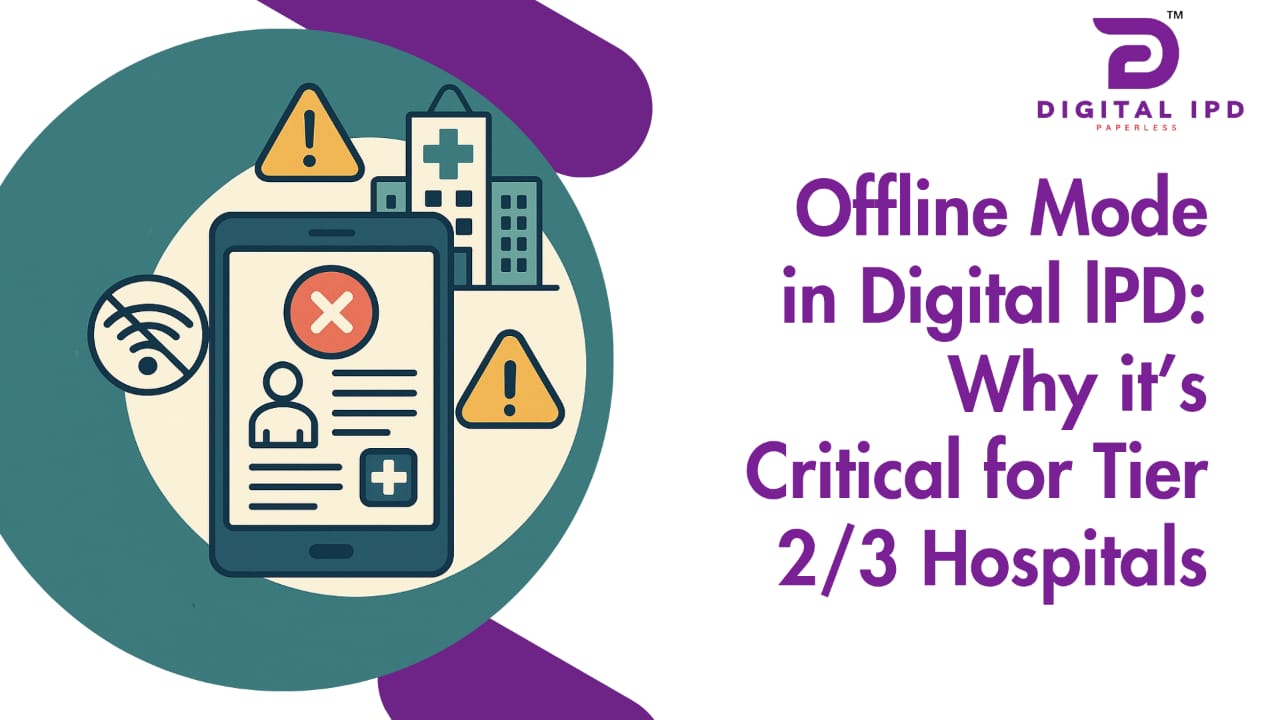
Picture this: Dr. Sharma is seconds away from prescribing antibiotics to a critical patient in his bustling district hospital. Suddenly, the internet vanishes; a frustratingly normal afternoon event. The patient’s digital records, including vital allergy alerts? Locked away!! Dr. Sharma scrambles, relying on fading memory or hunting through dusty paper files. Precious, lifesaving minutes slip by. This is not drama; it is the everyday struggle in thousands of Tier 2 and Tier 3 hospitals across India. This is why "Offline Mode" in Digital Ipd solutions is not a fancy extra; it is an absolute necessity.
The ground truth:
Let us face it. Big cities might boast decent broadband, but smaller Indian towns? They battle spotty, sluggish or simply nonexistent internet. Power cuts are routine, often knocking out mobile data towers too. Banking entirely on a cloud system needing constant online access? That is like building your house on quicksand, it collapses just when you need shelter most. For hospitals in these areas, serving massive populations with tight budgets, splurging on super reliable internet often is not an option. The very digital tool meant to help becomes a wall.
Offline mode:
So, what is the real deal with "Offline Mode" in a Digital Ipd? It is far more than a simple backup plan. It is about guaranteeing core hospital work never stops, no matter what is happening outside with the internet. Here is the breakdown:
- Care without interruption:
- Getting patients in and out: Front desk staff admit new patients, assign beds or discharge others smoothly; no waiting for bars on a screen.
- Doctors stay productive: Update notes, record vitals, add diagnoses and write prescriptions; all directly in the system. No panicked scribbling on paper, risking mistakes or forgotten details later.
- Ward management on track: Knowing bed availability, tracking patient moves, updating nurse duties; it all keeps flowing.
- Your data stays safe and sound:
Every action, every piece of information is securely saved right there on the hospital's own computer or server. When the internet flickers back to life? The system quietly syncs everything back to the main hub. Nothing vanishes. No need for messy double entries. No confusion about the latest record. Patient information stays complete and trustworthy.
- Keeping the cash flow moving:
Pharmacy staff hand out medicines using offline prescriptions. Diagnostic tests get ordered. The billing team creates provisional bills and logs charges. Once back online, everything syncs up. Financial records stay accurate, preventing lost revenue from billing delays or missing information.
Why this matters:
Offline mode’s value goes way beyond convenience; it touches lives:
- Safety first: Instant access to patient details (even just updated offline moments before) stops dangerous treatment delays, especially in emergencies. Knowing allergies or current meds does not get paused by a dead connection.
- Staff can breathe easy: Doctors, nurses and admin teams are not frozen by a lost signal. They focus purely on patients, not fighting with tech. Their spirits lift when tools actually help, not hinder.
- Building digital trust: Hospitals wary of going digital because of internet fears finally see a reliable way forward. Offline mode proves digital systems can work, even in tough spots.
- Fair care for all: It balances the scales. A hospital in a smaller town should not deliver broken care just because its internet is weaker than a metro hospital's. Offline capability ensures every patient gets continuous care; a basic right.
Good news spreads:
- Less paper chaos: True digital use means fewer frantic returns to messy paper during outages, cutting errors and saving hours on re-typing.
- Hospital keeps humming: Daily routines like admin jobs, reporting, managing resources, keep ticking over without a hitch.
- Grow without fear: As the hospital expands, the Digital Ipd system grows too, confident that a blip in the internet will not bring operations crashing down.
The non-negotiable’s:
For Tier 2 and Tier 3 hospitals across India, adopting Digital IPD is not maybe; it is essential for better efficiency, accuracy and patient care. But this shift only works if the tech understands the local reality. A strong, smart offline mode is not a bonus feature; it is the essential bedrock that makes the whole system practical and dependable.
It is about realizing that while a perfectly connected future is the goal, today’s healthcare heroes in smaller cities need tools that work solidly right now, in their world. Offline capability ensures the hospital’s core purpose; patient care never misses a beat, whether the power’s out or the signals gone. When the lights dim or the internet fizzles, care continues, seamlessly. That is the real strength, the vital need, of offline node. It is not just clever tech; it is tech built with genuine empathy for India’s vast and varied healthcare needs.