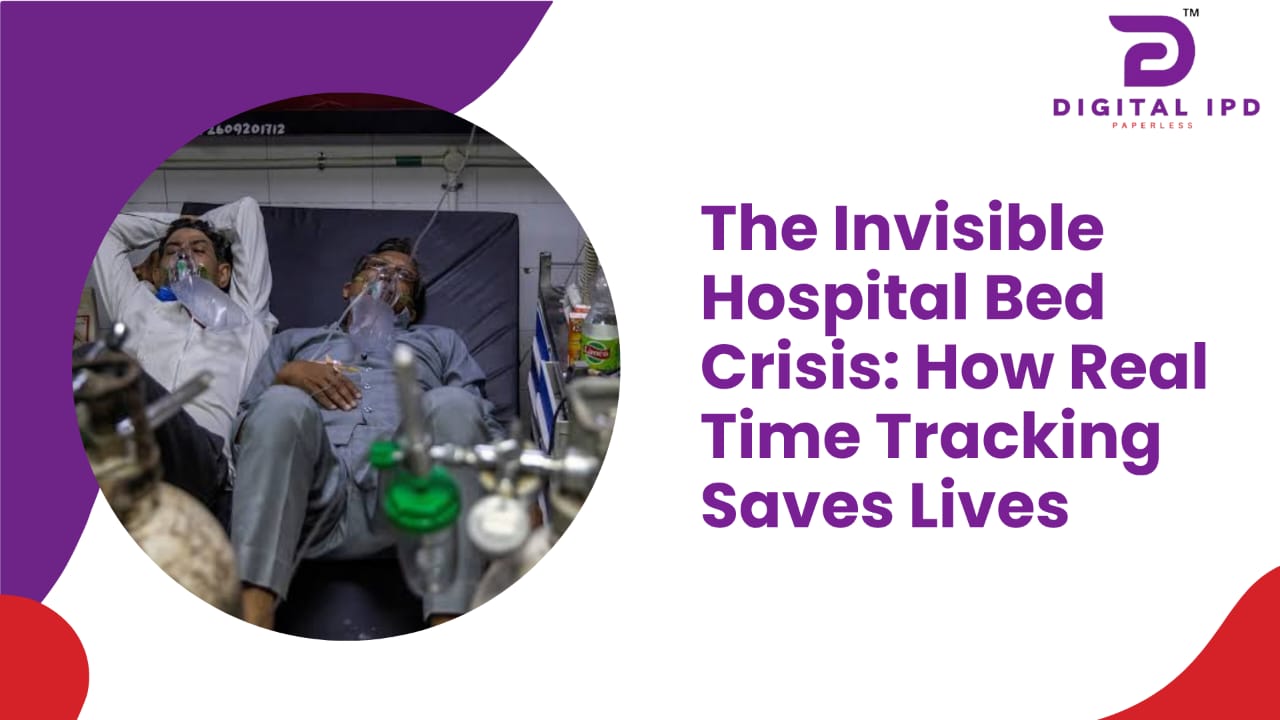
Picture this: Monsoon rain hammers Mumbai as Ramesh races his feverish mother to a crowded hospital. At reception, exhausted staff flip through paper logs before sighing: "No beds free. Wait." Nearby, monitors blink beside empty beds nobody can find. Sadly, this is not drama, it is daily reality across India. But what if hospitals could see every available bed instantly?
Hidden empty beds:
Old school bed management has brutal hidden costs:
- Patients pay with health: When ICU admissions lag by hours, survival rates plummet. That "waiting game"? It’s quietly deadly.
- Hospitals lose trust: Remember Chennai’s dengue chaos? Overloaded emergency wards made delays 40% longer; shattering community faith.
- Nurses break down: In Delhi government hospitals, nurses waste entire shifts playing "bed detective" instead of healing patients.
The culprit? Scribbled whiteboards and Excel sheets can’t track beds when discharges, transfers and cleaning collide in busy wards.
From chaos to control:
Modern systems work like a friendly hospital guide:
- Smart sensors and digital maps: Tiny wireless tags on beds ping status updates. Cleaners tap "room cleaned" on phones. Suddenly, every bed glows on a live map; free, occupied or needing cleaning.
- Discharge predictions: The system studies past patterns. If Mr. Patel in Ward 4 is likely heading home by 11 AM, his bed’s reserved before the next ambulance arrives.
- Crisis Mode: During accidents or floods, it auto-assigns beds by injury severity and doctor locations; no frantic debates.
"Think groping in a blackout versus flipping a switch," shares a Pune hospital manager. "You stop guessing and start solving."
India’s Crisis & Cure:
With heatwaves, festivals and monsoons overwhelming hospitals, real-time tracking is not just smart; it is essential. See how it helps:
- AIIMS Jodhpur cut wait times by half; bed cleaning sped from 90 to 20 minutes.
- Kolkata’s AMRI Hospital admitted 15% more patients daily without new beds.
- Readmissions dropped 12% as critical cases got beds faster.
Best part? Systems like Digital Ipd work offline during power cuts, sync data later and even speak regional languages.
Human wins:
This is not about machines replacing people; it is about giving time back:
- Nurses regain 100+ hours/month for actual care.
- Families get SMS alerts like "Bed ready in Ward 3C; 15 mins" (cutting anxiety by 60%).
- As a Bengaluru ICU nurse puts it: "Earlier, we would wheel patients to ‘empty’ beds...only to find them occupied. Now? We trust the system."
What’s next:
Forward thinking hospitals now link bed data to infection control. If a patient had contagion, staff get instant deep clean alerts; a COVID era lifesaver.
With India’s National Health Authority pushing digitization, solutions like Digital Ipd's Bed360 Suite offer:
- Live bed maps.
- Discharge forecasts.
- Staff mobile apps.
- Hassle free EHR integration.
Truth is: An empty bed saves no one. Real time tracking turns it into hope.
"True efficiency is not speed, it is smart movement. When minutes decide life or death, seeing beds is not luxury. It is duty."
Digital IPD Solutions
Used in 47 Indian hospitals, Digital IPD’s system slashes admission delays by 78%. See how Bed360 can transform your facility: https://digitalipd.in/