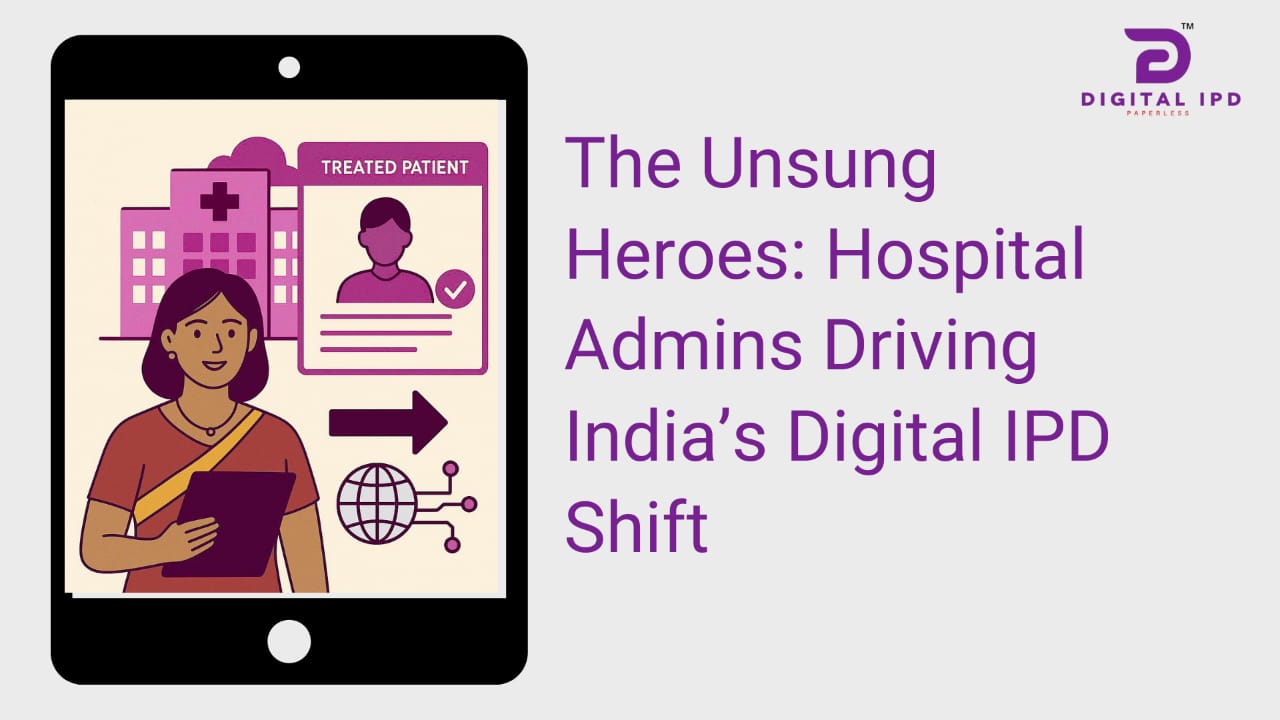
Think about the last time you visited a hospital. You likely remember the doctor’s diagnosis or the nurse’s care. But behind the scenes, hospital administrators wage a daily war against an invisible enemy: mountains of paperwork. In India’s bustling mid-sized hospitals, inpatient departments drown in files. Every single day, staff handle over 15,000 sheets of paper. Patient records disappear between floors. Doctors waste precious minutes, sometimes 15 or more hunting down a single medical history. Discharge processes drag on for hours. For administrators, managing IPDs often feels like holding back a tidal wave with bare hands.
Paperwork is dangerous:
When discharge delays happen or files go missing, patients lose faith. Modern Indians expect speed. They are used to UPI payments, CoWIN slots and Aadhaar services; all instant. Yet in countless hospitals, administrator’s battle:
- Bed chaos: Hunting vacancies via phone calls and scribbled whiteboards.
- Discharge gridlock: Manually collating bills, reports and prescriptions.
- Lost revenue: Unbilled tests or medicines buried in paper stacks.
The stakes are high. One study found medication errors soar by 35 percent in paper based systems compared to Digital Ipd's.
Smart solutions:
Top administrators skip “smart hospital” hype. Instead, they fix specific pain points:
- Live bed tracking: No more phoning every ward to find vacancies. Central dashboards show bed status, cleaning progress and patient flow in real time. If a COVID bed empties, cleaners get instant alerts, slashing turnaround by 25 percent.
- Discharge in seconds: Automation assembles bills, insurance claims and summaries in under a minute. No chasing lab reports. Patients leave when medically ready, not when paperwork catches up.
- One patient, one timeline: Digital Ipd's replace scattered files with unified records. Nurses log vitals on tablets. Doctors check histories on phones during rounds. Every pill given, form signed or shift change gets timestamped.
Winning teams over:
Digitizing IPDs is not a tech rollout, it is a culture shift. Successful administrators lead by:
- Testing waters first: Run pilots in one ward, such as maternity. Show results: “We cut discharge time from three hours to thirty minutes.” Proof builds belief.
- Picking tools that fit: Solutions like Digital Ipd thrive in tier 2 and tier 3 cities because they work offline and in local languages. Staff learn fast, no tech degree needed.
- Focusing on human wins: Remind teams: “Doctors train to heal, not file papers. Nurses join to comfort families, not hunt charts.”
The real triumph:
True IPD digitization is not about data storage, though one paperless hospital saves 24 trees yearly. It is seen in:
- A nurse comforting an anxious relative because she is free from clerical chaos.
- An administrator predicting bed shortages before emergencies hit.
- A patient grinning as discharge papers print faster than their Uber arrives.
For administrators, this is the quiet revolution: efficiency that leaves room for humanity. As a seasoned hospital director once said: “Victory is not in the operating theater. It is shutting that final paper file forever.”
Digital IPD understands Indian hospitals from the inside. Built for our reality, emergency admissions, bed shortages, rushed discharges; every tap saves time when every second counts.